Inside the Builders Stage: Robby Stein on Google's Path from First Users to Billions

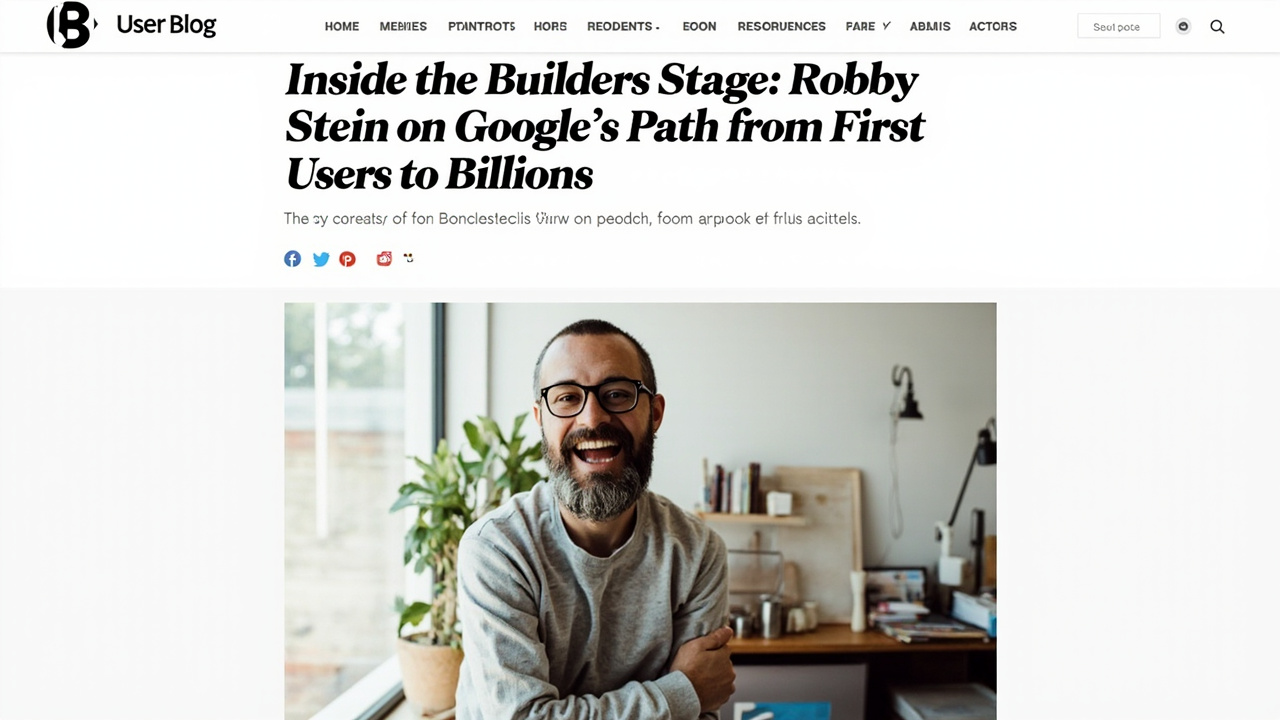
If you have ever asked Google a strange question, snapped a photo to solve a math problem, or relied on Search to translate a menu in a foreign city, you have brushed against the work of Robby Stein. A Vice President at Google, Stein has spent years helping shape some of the products that billions of people use every day. This October, he is stepping out from behind the search bar and onto the Builders Stage at TechCrunch Disrupt 2026, one of the most-watched gatherings in the global startup calendar. The announcement, made by TechCrunch on September 21, 2026, has already stirred excitement among founders, product leaders, and curious readers who want to know how an idea moves from a handful of curious users to a product the world cannot imagine living without.
Why This Conversation Matters
There is no shortage of conferences promising big-name guests. What makes this session stand out is the perspective Stein brings. His career has spanned the awkward, exciting early days of consumer products and the disciplined, billion-user era we live in now. For anyone building a product, scaling a team, or staring at a flat growth chart at 2 a.m., hearing how a leader at Google thinks about that journey can be a clarifying moment.
The session is framed around a simple but powerful arc: from first users to billions. It is the same arc almost every successful product travels, and yet the lessons learned along the way are rarely shared in the open. TechCrunch Disrupt, known for putting founders and the people who back them on stage, is offering a rare window into how a giant like Google navigates that curve.
Who Is Robby Stein?
Robby Stein is a Google Vice President focused on consumer products, including work tied to Search and Google Lens. Long before joining Google, Stein was known in product circles for his thoughtful writing on startups, growth, and the messy reality of building software people actually want to use. He previously held product leadership roles at Twitter, where he worked on the early experiments that helped shape how millions of people discovered and shared news in real time.
That blend of startup thinking and large-company execution is part of what makes his voice interesting. He has seen what it looks like when a product finds its first believers. He has also seen what changes when a product becomes infrastructure, something so woven into daily life that pulling it out would leave a hole. Talking through that contrast with a live audience is exactly the kind of conversation Disrupt was built for.
What the Builders Stage Is About
TechCrunch Disrupt runs multiple stages, but the Builders Stage is where the practical, in-the-weeds discussions tend to happen. It is the place where founders talk about the choices that do not make it into the glossy launch posts. Pricing decisions, feature cuts, hiring mistakes, product-market fit struggles, and the unglamorous work of keeping a product alive all tend to surface here.
Stein's session fits that mold perfectly. Rather than a sweeping keynote, it is positioned as a focused conversation, the kind that leaves attendees with specific things to try on Monday morning. For a general audience reading about it online, even the topic itself offers a useful lens: how do products grow, what shifts when they do, and what stays stubbornly the same?
Why People Should Pay Attention
You do not have to be a founder to find this conversation useful. Here are a few reasons it resonates beyond the startup world:
- It is a story about scale. Almost every modern product, from a small newsletter to a global app, faces the question of how to grow without breaking what made it work in the first place.
- It is a story about focus. Google's portfolio is famously wide, and hearing how leaders there prioritize and prune features offers lessons for anyone managing a packed to-do list.
- It is a story about users. The phrasing of the headline, from first users to billions, is a reminder that every massive product started with someone, somewhere, deciding to click install.
For readers who have ever wondered why their favorite app suddenly changed, or why a once-beloved product started to feel corporate, the kind of behind-the-scenes thinking Stein is known for can be quietly illuminating.
The Practical Side: Tickets and Timing
TechCrunch Disrupt 2026 will take place in October, and the announcement included a clear call to action for anyone considering attending: save up to $200 on tickets if you act before September 25, 2026. Early-bird pricing is a common feature of these events, both because planning a conference is expensive and because the audience that shows up early tends to be the audience that gets the most out of it.
For those who cannot attend in person, TechCrunch typically publishes coverage and interviews from Disrupt shortly after the event, which means even readers at home will get a window into what Stein shares on stage.
What to Listen For
When sessions like this one are scheduled, it helps to know what questions are worth carrying into the room, or onto the page, when the conversation is summarized later. A few worth keeping in mind:
- How does a team decide which early users actually represent the future, and which are simply curious?
- What habits or rituals helped Google maintain product quality as usage exploded?
- Which mistakes from the early startup years still shape how products are built today?
- How does a company stay close to its users when its users now number in the billions?
These are the kinds of questions that turn a stage interview into a usable playbook. They are also the kinds of questions that make a conference session feel less like a spectator event and more like a working session you happened to attend.
A Bigger Picture
There is a wider story underneath any single conference session. TechCrunch Disrupt has, for years, been a place where the future of technology gets introduced, debated, and sometimes gently roasted. The fact that a Google Vice President is taking a Builders Stage slot signals something healthy about the event: even leaders inside the largest companies in the world still see the startup community as a place worth showing up for, listening to, and learning from.
For a general audience, that is a useful thing to remember. The same tech industry that produces billion-user platforms is still, at heart, a community of builders trading notes on what works. Sessions like Stein's are part of how that knowledge moves around.
If you have ever built anything, from a side project to a small business to a feature your team relies on, the arc from first users to billions is your arc too, in some form. Watching someone who has actually walked that path talk through it out loud is one of the better uses of an hour you can find online or in person this October.
Source: TechCrunch