Living in the Same City as Your Abusers: Oxford Survivors Speak Out

For most people, a trip to the supermarket is a small, forgettable moment in the week. For some survivors of child sexual abuse in Oxford, it can be something else entirely. A BBC News report published this week features women who were abused as underage girls by organised grooming networks, and who now navigate a city in which the men who harmed them still live, work, and shop alongside them.
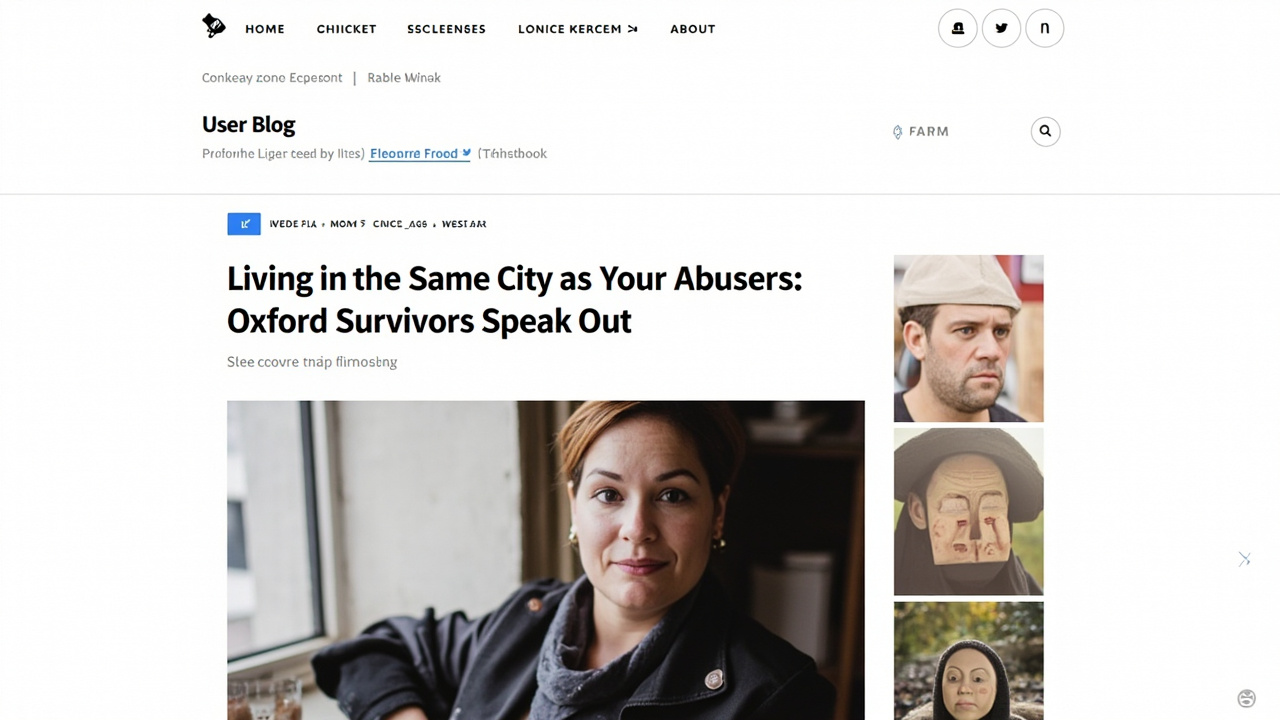
One survivor, quoted in the report, put it plainly: she still sees her abusers in the supermarket. The phrase is striking not because it is dramatic, but because it is ordinary. It is the ordinariness that makes it so difficult to live with.
What the survivors describe
According to the BBC's reporting, the women featured in the piece were groomed and sexually abused as children by men operating in coordinated groups. These networks, sometimes referred to in the press as "grooming gangs," became a major subject of public concern in the United Kingdom following revelations about systematic abuse in towns such as Rotherham, Rochdale, and Telford.
Oxford has its own painful chapter. The survivors who spoke to the BBC describe abuse that took place when they were under the age of consent, in a context where multiple perpetrators acted together, often targeting vulnerable teenagers. Decades on, many of the men convicted of those crimes have now been released from prison. The survivors say this means the city itself has become a landscape of triggers.
"I see my abusers in the supermarket. I cannot go to certain parts of town."
This kind of statement, which echoes what survivors of crime have said in other UK cities, captures something that statistics alone cannot. The impact of serious sexual offences does not end at sentencing. It continues in the everyday.
Why this story matters now
There are several reasons the BBC's report has landed at this particular moment.
- Release of convicted men. Prison sentences served by those involved in historical grooming cases are coming to an end. Survivors are increasingly encountering the people who hurt them in public spaces.
- Ongoing reviews and inquiries. The UK government has previously commissioned inquiries into how local authorities and police handled grooming-gang cases. Discussion about accountability, support for victims, and the supervision of released offenders continues.
- City life after trauma. Survivors often cannot simply move away. Many have family ties, jobs, schooling for their own children, and limited means. The question of how a city treats its survivors, rather than just its perpetrators, is being asked more loudly than ever.
The geography of trauma
Researchers who study the aftermath of sexual violence often use the term "spatial trauma" to describe what happens when the places associated with harm remain part of a survivor's daily life. A street corner, a bus route, a particular shop, or a park can become inseparable from memory.
When survivors of organised abuse speak about avoiding certain neighbourhoods, they are not describing irrational fear. They are describing a rational response to a real environment in which danger, or the memory of danger, is present. The trauma is reinforced each time they step outside.
This is also why proposals for restrictive orders on released offenders tend to focus on exclusion zones. These measures can help in specific cases, but they cannot redraw a whole city. Survivors often feel that the burden of avoiding harm falls on them, rather than on the systems that allowed the harm to take place in the first place.
What the survivors are asking for
The women in the BBC's piece are not asking for sympathy alone. They are speaking publicly because they want changes that are practical and long overdue.
- Better information. Some survivors say they have not been formally told when an abuser has been released or is living in their area. This lack of communication adds to anxiety and removes any sense of agency.
- Specialist support. Counselling for survivors of organised child sexual abuse is rare, and long waiting lists are common. Survivors want therapists who understand the specific dynamics of group grooming rather than generic trauma care.
- Recognition of ongoing harm. Society often speaks about these cases in the past tense. The survivors are keen to point out that for them, the consequences are present tense.
How to read this story with care
Stories about grooming gangs can quickly become politicised, used to score points in wider arguments about immigration, policing, or religion. It is worth holding two things at once.
First, the criminal acts described were carried out by individual men, and those men are responsible for what they did. The survivors' courage in speaking out deserves to be heard on its own terms.
Second, the institutions that failed to protect them, including councils, police forces, and sometimes media outlets, are also part of the story. Reports in towns such as Rotherham showed how fears about being labelled racist sometimes overrode the duty to protect children. That history is part of why survivors feel compelled to speak now.
A wider conversation
Oxford is not unique. Cities across the UK and beyond have confronted similar histories, including in places where organised abuse went unaddressed for years. What makes the Oxford survivors' account particularly resonant is the simplicity of the image: a woman reaching for groceries and seeing the face of the man who abused her as a child.
That image is a reminder that justice is not only about what happens in court. It is also about what happens afterwards, in the checkout queue, on the high street, and in the long, slow work of rebuilding a life in the same place where it was first broken.
For readers who have not experienced this kind of trauma, the story is a chance to consider what "moving on" really means, and who gets to define it. For those who have, it may be a difficult but validating read, one that says, plainly, that the supermarket trip is not small, and never was.
Source: BBC News