Why Russia's Three-Day Election Matters Even If the Outcome Looks Decided

On the third and final day of Russia's parliamentary vote, voters are heading to the polls in a contest that President Vladimir Putin has openly tied to public support for the war in Ukraine. While the ruling United Russia party is widely expected to keep its grip on the State Duma, the election is drawing global attention precisely because of what it reveals, and what it conceals, about political life inside Russia.
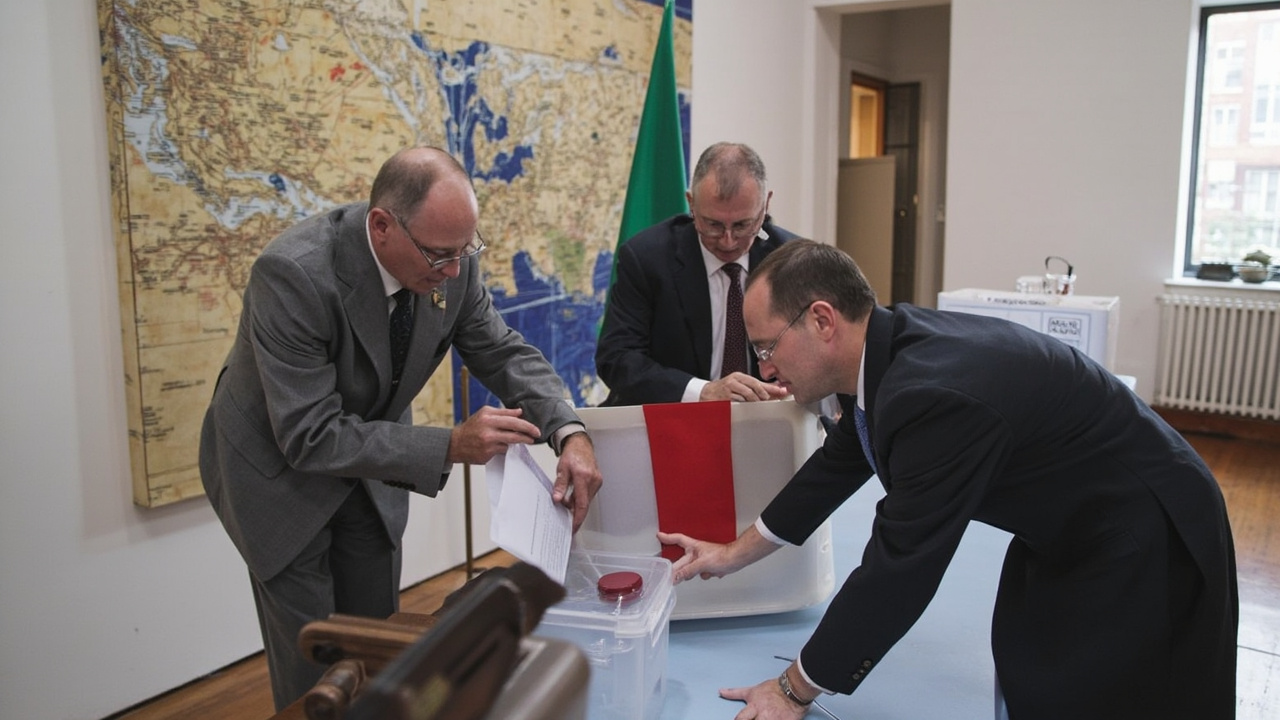
An Election Built Around a Single Question
From the start, this vote has carried a heavier weight than a routine parliamentary cycle. By linking the ballot box to the war, Putin has turned what is usually a procedural exercise into something closer to a loyalty test. Citizens walking into polling stations over three days, a format Russia adopted during the COVID-19 pandemic and has kept in place since, are stepping into a moment where the official message is unmistakable: standing behind your country's direction means standing behind the country's soldiers.
That framing matters because parliamentary elections in Russia, even under normal conditions, rarely produce genuine suspense over who controls the lower house. The State Duma's 450 seats are filled through a mixed system of party lists and single-member districts, and the country's election infrastructure has long been criticized by international observers for favoring the incumbents. United Russia, the party closely associated with Putin, has dominated the chamber for more than two decades.
Why United Russia Is Still Expected to Win
The expectation that United Russia will once again finish on top is not so much a prediction as a starting point. The party enjoys structural advantages that go beyond popularity: access to state media, the support of regional governors, and an electoral machinery that has been refined over many cycles. Opposition parties that have agreed to play by the rules set by the Kremlin, such as the Communist Party, the Liberal Democratic Party, and A Just Russia, are generally tolerated as long as they do not challenge the central authority of the presidency.
What is different this time is the public posture. By asking voters to read the election as a verdict on the war, the authorities have elevated the stakes of even a routine win. A strong showing for United Russia, which polls suggest is likely, can be presented at home and abroad as evidence that Russians broadly back the conflict. A weaker-than-expected result, while unlikely, would create an awkward narrative gap for the Kremlin.
Where the Dissent Has Gone
Critics, both inside and outside Russia, argue that this kind of framing only makes sense in a system where voters have already been narrowed into a single acceptable choice. Independent candidates face signature-gathering hurdles, media coverage of opposition figures has been curtailed, and several prominent critics of the war have left the country, been jailed, or been designated under laws that restrict their ability to speak publicly.
The result is that the loudest voices against the war tend to exist in exile, on platforms like YouTube, Telegram, and X, rather than on Russian television. For voters inside Russia, the information environment during the campaign has been carefully managed. That is part of why outside observers, from the OSCE to human rights groups, treat Russian elections as much as a study of civic space as a study of ballot counts.
Three Days, Not One: Why the Format Itself Is News
Russia began using multi-day voting in 2020, citing public health reasons during the pandemic. The format has since become permanent, and it has drawn criticism from election monitors who say extended polling windows make it harder to observe the process and easier to inflate turnout figures. Defenders argue it increases convenience, especially for voters in remote regions of Siberia and the Far East.
For international audiences watching the vote unfold, the practical effect is that results tend to dribble out over hours rather than arriving in a single dramatic night. That slower cadence has become a feature of Russian elections, and it shapes how the world reads each new set of numbers.
Why This Vote Resonates Beyond Russia's Borders
Even when the headline outcome is predictable, Russian parliamentary elections matter because of what they tell us about the country's trajectory. The State Duma sets the legislative agenda for social policy, the economy, and the legal framework that governs dissent. In a wartime environment, parliament also becomes a place where wartime restrictions are codified, budgets are shaped, and the boundaries of acceptable speech are redrawn.
For European governments in particular, the vote is being watched as a signal of how durable the current Russian leadership's war footing appears to be. A comfortable United Russia majority would be read in many capitals as a sign that the political cost of the conflict, at least domestically, has not yet caught up with the Kremlin. That, in turn, shapes expectations about how long the war might continue and what kind of Russia its neighbors will be dealing with in the years ahead.
What to Watch in the Final Hours
As polling stations close across Russia's eleven time zones on Sunday evening, a few things will be worth paying attention to beyond the topline seat count. Turnout figures will be scrutinized by analysts who argue that participation numbers in tightly controlled elections often tell a more honest story than vote shares. The performance of the systemically tolerated opposition parties will hint at whether the Kremlin wants to preserve even a thin veneer of pluralism or further narrow the political field.
Most of all, the language used by Russian officials in the hours and days after results are announced will signal whether the election is being sold primarily as a domestic mandate, a foreign policy message, or both. In a system where the outcome is rarely the headline, the framing tends to be.
The election is not just a contest for seats; it is a stage-managed moment where the country's direction is being confirmed, and the world is being invited to watch.
For a general audience unfamiliar with the finer points of Russian politics, the simplest takeaway is this: when the war is so openly woven into an election, the vote becomes less about choosing leaders and more about reading the temperature of a country under pressure from every direction.
Source: France24